
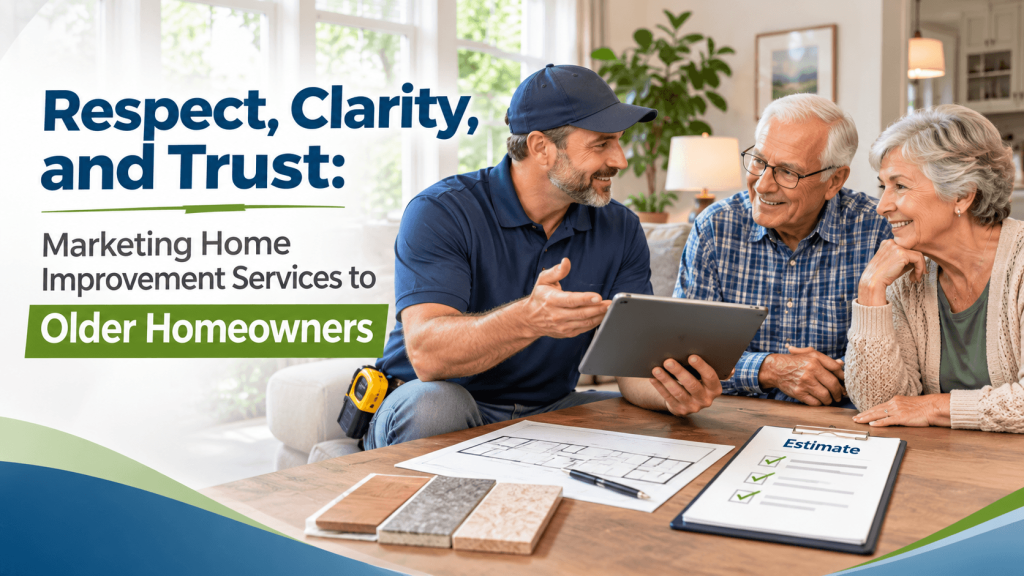
A 74-year-old homeowner in Tucson wants a walk-in shower and grab bars so she can stay in the house she’s lived in for thirty years. Her son helps her search online. Many contractor websites use tiny text, push urgent limited-time offers, and say little about accessibility work. One company’s site has large, readable pages explaining aging-in-place modifications, clear pricing guidance, and a phone number answered by a real person. They call that one.
Older homeowners are a large and growing group of home improvement customers. Reaching them well requires clarity, respect, and trust.
Design Content Older Readers Can Use
A few practical choices make a big difference:
- Use readable text sizes and strong color contrast
- Keep navigation simple, with clearly labeled pages
- Put a phone number at the top of every page, since many older customers prefer to call
- Write in plain language and explain technical terms
- Skip countdown timers and other pressure tactics
Many decisions also involve adult children or caregivers, so content should speak to both homeowners and the family members helping them.
Explain Aging-in-Place Services Clearly
Describe the modifications you offer, such as grab bars, curbless showers, ramps, wider doorways, and better lighting, along with what each involves. Mention relevant training, such as the Certified Aging-in-Place Specialist designation from the National Association of Home Builders, only if you actually hold it.
Be careful with claims about safety or health. Focus on what a modification does, such as removing the need to step over a tub edge, rather than promising outcomes.
Build Trust Through Transparency and Consistency
Older homeowners are frequent targets of home repair scams, so transparency matters. Share your license, insurance, physical address, and written estimate process, and never ask for full payment upfront.
Directories help families confirm a contractor is legitimate and local. A general directory such as Business 360 Now includes a Home Improvement Services category where homeowners and families compare providers, and it shows how others describe accessibility services. Keep your listing’s phone number and address consistent with your website and printed materials.
A common mistake is using stereotypes or condescending language. Speak to older customers as capable adults making informed decisions about their homes.
Serve the Customer, Not the Stereotype
Older homeowners value clear information, honest pricing, and respectful service. Design readable content, explain your services plainly, and keep your website, profile, and listings, including on Business 360 Now, consistent and trustworthy.
Frequently Asked Questions
What home improvements do older homeowners commonly request?
Common projects include grab bars, walk-in or curbless showers, ramps, stair lifts, wider doorways, lever-style handles, and better lighting. Many homeowners also want general maintenance help as physical tasks become harder. Ask about their goals and daily routines to recommend changes that genuinely fit.
Should we market to adult children as well as older homeowners?
Often, yes. Adult children frequently help research contractors and may join consultations, so content that explains options clearly and welcomes family involvement helps. Always treat the homeowner as the decision-maker unless they say otherwise, and respect their privacy and preferences.
How can we reassure older customers about scams?
Be transparent about your license, insurance, address, and estimate process. Provide written estimates and contracts, avoid high-pressure tactics, and never ask for full payment upfront. Encourage customers to verify your credentials and check reviews, and welcome family members who want to be involved.
Do aging-in-place certifications matter?
Credentials like the Certified Aging-in-Place Specialist designation show training in accessibility design and can reassure families. They aren’t required for most projects, and experience and references matter too. If you hold one, explain what it means in plain language instead of just listing an acronym.