
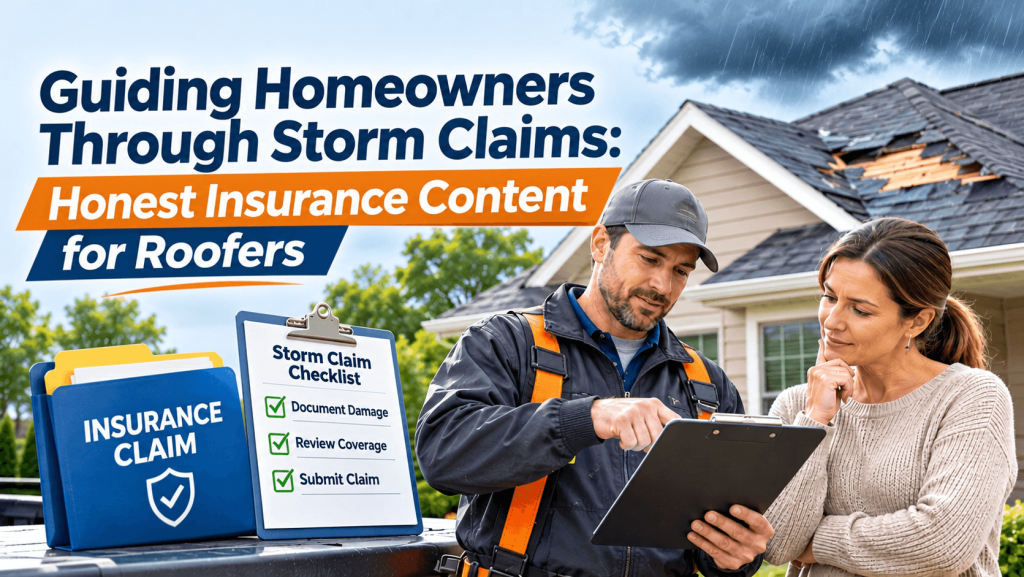
After a hailstorm sweeps through Wichita, a homeowner sees dented gutters and missing shingles. Within a day, three contractors knock on her door, each promising a roof paid for by insurance. Confused, she searches online for how roof insurance claims work and finds a local roofer’s page that explains the process step by step, without pressure. She calls that company.
Storm season brings urgency, confusion, and sometimes aggressive sales tactics. Clear, honest content about the claims process helps homeowners make good decisions and helps your company stand out for the right reasons.
Explain the Process Step by Step
Homeowners often don’t know what happens after a storm. A helpful page can walk through:
- Documenting damage safely with photos, without climbing onto the roof
- Reviewing the policy and contacting the insurance company to start a claim
- Scheduling an inspection with a contractor and the insurance adjuster
- Understanding the insurer’s estimate and the scope of covered repairs
- Paying the deductible and scheduling the work
Make clear that the insurance company decides coverage, not the contractor.
Stay Honest About What Contractors Can and Can’t Do
Avoid promises of a free roof. Coverage depends on the policy and the insurer’s assessment. Many states also have laws against contractors waiving or absorbing a homeowner’s deductible, and some restrict contractors from negotiating claims on a homeowner’s behalf unless they’re licensed public adjusters.
Check the rules in your state and describe your role accurately. Explaining these limits builds credibility, especially while homeowners are being approached by out-of-town storm chasers.
Make Your Information Easy to Find After a Storm
After major weather, homeowners search quickly. Link your claims page from your homepage and storm damage service page, and share it in a Google Business Profile update when storms hit your area. Keep phone lines staffed or set clear callback expectations.
Directories help homeowners verify that a roofer is local and established. A general directory such as Business 360 Now includes a Roofing category where homeowners compare roofing companies, and it shows how others describe storm services and inspections. Keep your listing’s address and phone number identical to your website, since homeowners are often wary of unfamiliar crews.
A common mistake is pressuring homeowners to sign a contract before the insurance adjuster has inspected the damage.
Be the Calm, Trusted Voice
Storm damage is stressful, and honest guidance stands out. Explain the claims process clearly, describe your role accurately, and keep your website, profile, and listings, including on Business 360 Now, easy for homeowners to find when they need help most.
Frequently Asked Questions
Can a roofing contractor file an insurance claim for a homeowner?
Usually the homeowner files the claim with their insurance company. Contractors can help document damage and meet the adjuster, but rules vary by state, and some states prohibit contractors from negotiating claims unless they’re licensed public adjusters. Check your state’s regulations and describe your role accurately.
Is it legal for a roofer to cover a homeowner’s deductible?
In many states, no. Several states prohibit contractors from waiving, rebating, or absorbing insurance deductibles, since it can amount to insurance fraud. Even where it isn’t specifically banned, it’s risky. Be clear on your website that homeowners are responsible for paying their own deductible.
How quickly should homeowners file a storm damage claim?
Many insurance policies require prompt notice of damage, and some set specific time limits for filing. Homeowners should review their policy and contact their insurer as soon as practical, document damage with photos, and make temporary repairs to prevent further damage when it’s safe to do so.
How can homeowners spot storm-chasing contractors?
Encourage homeowners to verify licensing, a local address, insurance, and reviews, and to be cautious of anyone demanding large upfront payments or pressuring them to sign immediately. State attorneys general and local consumer protection agencies often publish storm-season warnings worth linking to.