
A dumpster rental company in Seattle advertises eco-friendly waste removal on its website. A customer asks what that means: is the debris recycled, sorted, or simply hauled to a landfill? Staff can’t give a clear answer. A competitor’s site explains which materials it diverts for recycling, where they go, and what customers can do to help. The customer books with the competitor.
Many customers care about where their waste goes. Specific, honest information about recycling and diversion builds trust, while vague green claims can backfire.
Why Vague Claims Are Risky
The FTC’s Green Guides advise marketers against broad, unqualified environmental claims like eco-friendly or green, because they’re hard to substantiate and can mislead customers. Claims should be specific and supported by evidence.
Some states also have their own rules for environmental marketing terms, including words like recyclable. Review the Green Guides and your state’s requirements before publishing sustainability language.
Describe What You Actually Do
Specific details are more convincing than slogans:
- Which materials you separate for recycling, such as metal, cardboard, or concrete
- Where materials go, such as local recycling facilities or transfer stations
- Any donation partnerships for reusable furniture or building materials
- What customers can do to improve recycling, such as keeping loads sorted
- Limits, such as materials you can’t accept or recycle
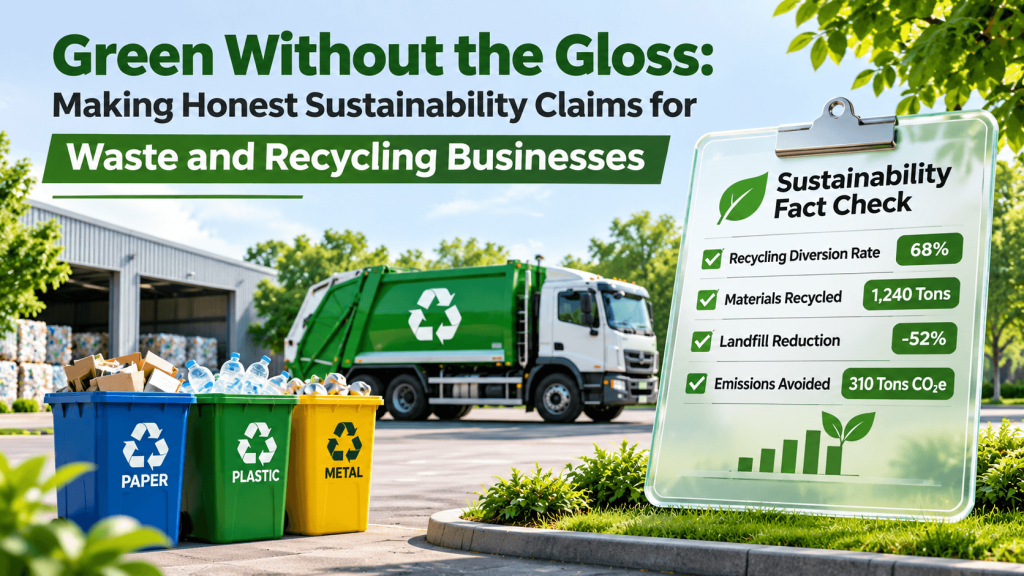
If you track diversion rates, share them with context and explain how they’re measured. If you don’t, describe your practices rather than inventing percentages. Photos of sorting areas or recycling bins on site can also show customers what happens behind the scenes.
Keep Messaging Consistent Across Platforms
Customers may see your sustainability claims on your website, Google Business Profile, social media, and directory listings. Use the same accurate wording everywhere, and update it when your practices change.
A general directory such as Business 360 Now includes a Waste Management category where customers compare haulers, recycling services, and junk removal companies, and it shows how others describe their services. If you mention recycling in your listing description, keep it specific and consistent with your website.
A common mistake is copying sustainability language from large national companies without having the same programs in place.
Earn Trust With Specifics
Customers want to know what really happens to their waste. Describe your practices clearly, avoid vague green claims, and keep messaging consistent across your website, profiles, and listings like Business 360 Now.
Frequently Asked Questions
Can we call our business eco-friendly?
Broad terms like eco-friendly are hard to support and may mislead customers, according to the FTC’s Green Guides. It’s safer to make specific claims you can back up, such as noting that you separate metal and cardboard for recycling. Specific statements are also more convincing to customers.
What counts as evidence for a recycling claim?
Records from recycling facilities, weight tickets, contracts with processors, or documented procedures can all support claims about what you divert. Keep records organized and current, and if you publish percentages, be ready to explain how they were calculated and over what period.
Should we mention materials we can’t recycle?
Yes. Being clear about limits builds trust and prevents frustration. Explain which materials go to landfill and why, and offer tips for customers who want to recycle more, such as local drop-off options for electronics, batteries, or leftover paint. Clear guidance helps customers sort loads before pickup.
Do recycling claims matter for local search?
Customers sometimes search for services like construction debris recycling, so clear descriptions can help the right people find you. Accuracy matters more than keywords, though. Specific, honest content serves customers well and supports your reputation over the long term. Avoid stuffing pages with green buzzwords.